The Digital Weaponization of Physical Assets: From Commercial Refrigerators to the Smart Grid
Security
In October 2026, attackers accessed the refrigeration controllers of hundreds of French supermarkets. They did not steal data. They did not deploy ransomware. They simply issued a legitimate system command, forcing the units into a continuous 50°C defrost cycle.
Within hours, the physical damage included tens of millions of euros in spoiled inventory and localized equipment fires. By November, similar disruptions had spread to supermarkets across Belgium, the Netherlands, and several other European countries.
The attackers exploited exposed Danfoss case controllers running embedded web servers. The commands sent were syntactically valid but contextually destructive. This incident proves that in operational technology (OT), the barrier between digital access and physical destruction has completely vanished. Physical systems are now blindly dependent on digital networks, and the threat model has shifted from data exfiltration to fleet-wide physical sabotage.
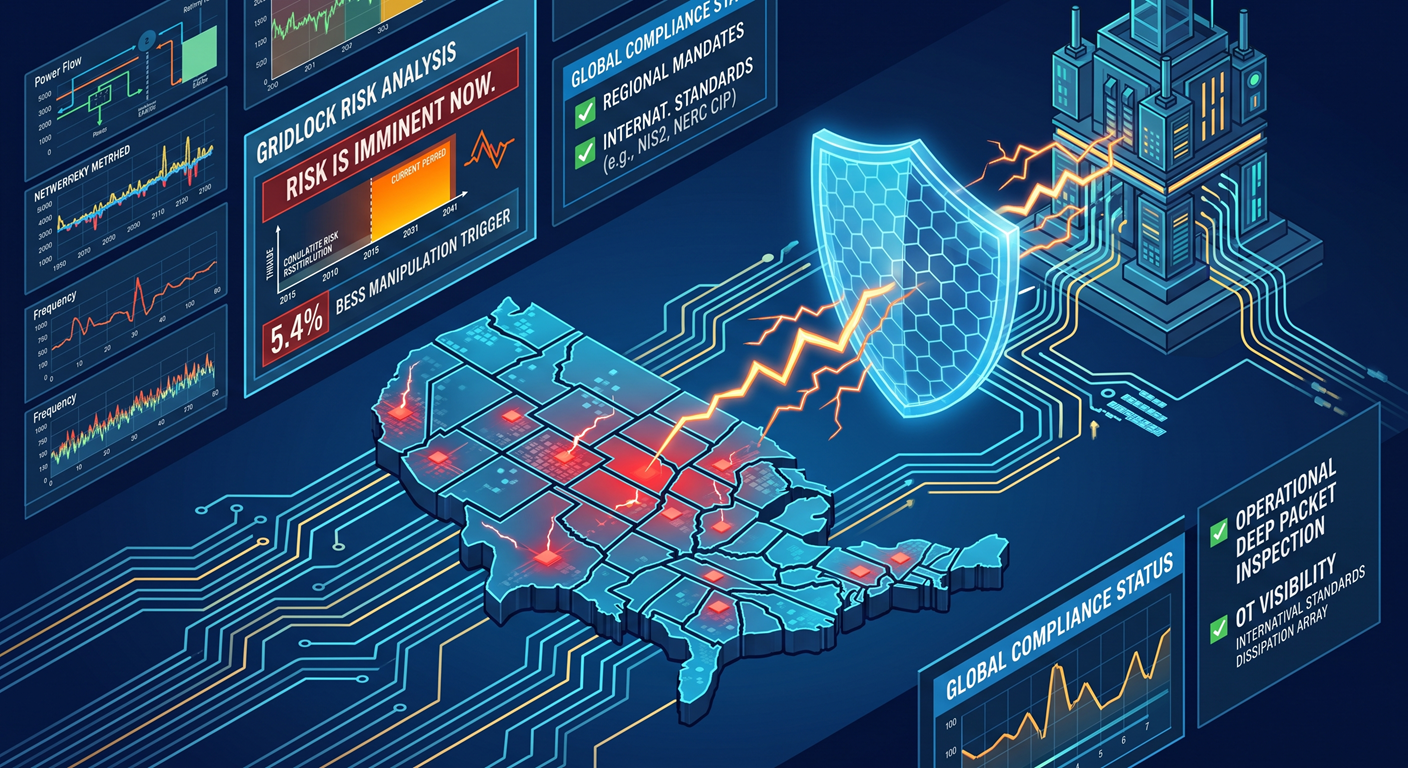
While a compromised grocery supply chain is expensive, applying this exact threat model to electric utilities and smart grids poses a catastrophic risk. The power sector relies on highly distributed control systems, remote sensors, and inverter-based resources that govern physical physics through digital interfaces. If a simple temperature setpoint alteration can burn down a commercial freezer, an unauthorized command injected into grid infrastructure can destabilize regional power delivery.
Defending critical infrastructure requires abandoning generic IT security paradigms. Energy companies must map cybersecurity risks and strict regulatory mandates directly to operational grid impact.
Given the severe industry resource gap and the scarcity of specialized OT cybersecurity experts, relying on fragmented security tools and heavy manual workloads is unsustainable. Grid operators require purpose-built, agentless anomaly detection that instantly flags contextually malicious commands without interfering with complex operational environments. Delivering this level of real-time security and compliance tracking - while driving drastic cost reductions in implementation and ongoing operations - is the only way to scale defense across distributed physical assets.
A valid digital command executed at the wrong time is a physical weapon. The energy sector must secure the operational execution layer before a digital input takes the grid offline.